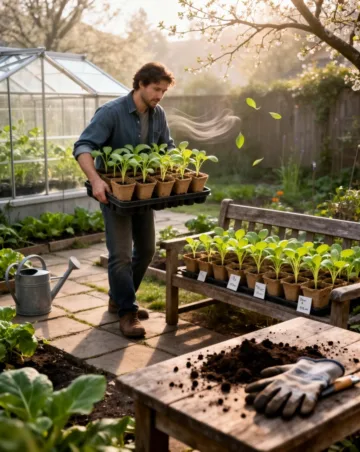
The Secret to Garden Success: Moving Your Plants from Indoors to Out
Introduction: Why Your Seedlings Need a Transition Period
You’ve spent weeks nurturing your tiny green friends on a sunny windowsill or under glowing grow lights. You’ve watched them sprout from tiny seeds into vibrant, leafy starts. It is incredibly tempting to grab your trowel the moment the sun comes out and put them straight into the garden soil. However, doing so without a proper introduction to the elements is a recipe for disaster. This critical transition phase, known as hardening off seedlings, is the difference between a thriving harvest and a wilted disappointment.
Think of your indoor environment like a climate-controlled spa. There is no wind, the temperature is constant, and the light is filtered. Outside, the world is much more intense. Strong UV rays, gusty winds, and fluctuating night temperatures can shock a tender plant’s system. To ensure your hard work doesn’t go to waste, you must strategically prepare them before you finally transplant seedlings outdoors. In this guide, we will walk through the science and the soul of this process so your garden can reach its full potential.
Understanding the Science of Plant Stress
The Role of the Cuticle
In the controlled environment of your home, plants don’t need to protect themselves against moisture loss. Outside, they develop a waxy coating on their leaves called a cuticle. This “sunscreen” prevents the plant from drying out. When we slowly expose them to the elements, we are essentially telling the plant to thicken that protective layer.
Strengthening Cell Walls
Indoors, there is no wind to push against the stems. Outdoors, even a light breeze acts like weightlifting for a plant. Exposure to air movement triggers the plant to develop stronger, more fibrous stems. Without this, a sudden gust after transplanting could snap your precious heirloom tomatoes right at the base.
Preparing for the Transition
Checking the Frost Dates
Before you even think about moving your trays, you must know your local “last frost date.” While some plants like kale or peas can handle a bit of chill, warm-weather favorites like peppers and basil will perish if the temperature drops too low. Aim to start the transition process about 7 to 10 days before your intended planting date.
The Health Check
Only move healthy plants outside. If a seedling is struggling with pests or nutrient deficiencies, the stress of the outdoors will likely finish it off. Ensure they have at least two sets of “true leaves” (the leaves that grow after the initial seed leaves) before starting the process.
Step-by-Step Instructions for a Smooth Transition
The key to hardening off seedlings is patience. You cannot rush nature, but you can work with it by following this incremental seven-day schedule. This gradual exposure allows the plant’s internal chemistry to adapt without triggering a “shock” response that stunts growth.
- Day 1: Place your seedlings in a sheltered, fully shaded spot outdoors for just one to two hours. A covered porch or the shadow of a large tree is perfect. Bring them back inside immediately after.
- Day 2-3: Increase the time to three or four hours. Allow them to have a tiny bit of dappled sunlight, but keep them protected from any strong winds.
- Day 4-5: Gradually move them into direct morning sunlight for a few hours, then move them back to the shade. By now, they can stay outside for 6 to 8 hours during the day. If the nights are warm (above 50°F or 10°C), you can leave them in a garage or shed overnight.
- Day 6-7: Leave the plants out all day and, if temperatures permit, all night. By day seven, they should be able to handle full sun and the natural rhythm of the outdoors.
Once this week-long process is complete, your plants will have the physical resilience required to survive. You are now ready to transplant seedlings outdoors into their permanent garden beds or large containers. Always try to do the actual transplanting on a cloudy day or in the late afternoon to reduce “transplant shock” from the midday sun.
Tips from Experienced Gardeners
The “Tough Love” Bench
Many seasoned gardeners keep a specific “transition bench” in a spot that gets morning sun and afternoon shade. This saves you from moving heavy trays all over the yard. If you have a large number of plants, using a wagon can make the “in and out” shuffle much easier on your back.
Watch the Water
Seedlings dry out much faster outdoors than they do inside. Check the soil moisture twice a day during the hardening process. A dry seedling is a stressed seedling, and stress during this phase can lead to “bolting” (premature flowering) later in the season.
Common Mistakes to Avoid
Moving Too Fast
The most common mistake is skipping days or taking a shortcut. If you leave a “spoiled” indoor plant in full sun for six hours on the first day, the leaves will turn white—a sign of leaf scorch. While the plant might survive, it will spend weeks recovering instead of growing.
Ignoring the Wind
We often think about sun and cold, but wind is a silent killer of young starts. Large-leaved plants like squash and cucumbers act like sails; a strong gust can rip their leaves or tip over light plastic pots. Always find a windbreak for the first few days.
Tools and Materials Needed
You don’t need expensive equipment, but a few items can make the process more successful:
- Sturdy Trays: It’s easier to move 20 plants at once than one by one.
- Thermometer: A simple outdoor thermometer helps you monitor the actual temperature in the shade versus the sun.
- Shade Cloth or Old Sheeting: If you don’t have a shaded porch, you can use these to create temporary protection.
- Watering Wand: A gentle mist or “rain” setting is better for delicate seedlings than a heavy stream from a hose.
Seasonal and Climate Considerations
High Altitude Gardening
If you live at a high elevation, the UV rays are significantly stronger. You may need to extend the hardening process to 14 days and use a light row cover to filter the intense sun even after transplanting.
Humid vs. Dry Climates
In very dry climates, plants transpire (lose water) quickly. You might need to mist the leaves during the day to prevent them from wilting. In very humid areas, ensure there is enough airflow between the pots to prevent fungal issues like “damping off.”
Benefits of This Gardening Method
Why go through all this trouble? The benefits are measurable. Hardened plants establish their root systems faster, leading to earlier harvests. They are also much more resistant to pests and diseases. A plant that has been gradually toughened up has a “head start” on the season, whereas a shocked plant may sit in the soil for weeks without putting on any new growth.
Alternative Methods: Cold Frames and Cloches
The Cold Frame Advantage
A cold frame is essentially a bottomless box with a clear lid (often an old window). It acts like a mini-greenhouse. Instead of moving your plants back and forth, you can keep them in the cold frame and simply prop the lid open more and more each day. This is a fantastic labor-saving device for serious hobbyists.
Using Cloches
If you must plant early, you can use cloches (plastic or glass domes) over individual plants. This provides a localized “hardening” environment, but be careful—on a sunny day, a cloche can act like an oven and cook your plant in minutes.
Conclusion: Achieving Garden Greatness
The journey from seed to harvest is filled with small steps that lead to big results. By taking the time for hardening off seedlings, you are respecting the biology of the plant and setting yourself up for a bountiful season. It may seem like a chore to move your trays in and out every day, but the strength and vigor your plants display in mid-summer will be your reward. Once you finally transplant seedlings outdoors and see them stand tall against the wind and sun, you’ll know that those extra few days of preparation were the best investment you could make for your garden.
Frequently Asked Questions
How do I know if my seedlings are “sunburned”?
Sunburn (leaf scorch) usually appears as white or silvery patches on the leaves. These areas may become papery and thin. If this happens, move the plant back to total shade for a few days to let it recover.
Can I harden off plants on a rainy day?
A light, gentle rain is actually quite beneficial as it provides moisture and humidity. However, a heavy downpour can damage delicate stems or wash away the soil from the pots. Use your best judgment based on the intensity of the storm.
What if I forget my plants outside overnight?
If the temperature stayed above 45°F, they are likely fine. If there was a frost, check for limp, blackened, or water-soaked leaves. Bring them into a warm spot immediately and avoid overwatering while they recover from the cold shock.
Do store-bought seedlings need to be hardened off?
It depends on where you bought them. If they were sitting outside at a garden center, they are likely already acclimated. If you bought them from inside a grocery store or a climate-controlled greenhouse, you should treat them like your own indoor starts and harden them off for 3-5 days.
Is a fan indoors the same as hardening off?
Using a fan indoors helps strengthen the stems, but it does not prepare the plant for UV rays or temperature swings. It is a great “pre-step,” but it doesn’t replace the need for outdoor exposure.