The Ultimate Guide to Homegrown Greens: From Seed to Salad Bowl
There is a unique satisfaction that comes from stepping into your backyard, snipping a few crisp leaves, and serving a salad that was growing only minutes prior. If you have ever bought a bag of wilted, flavorless greens from the supermarket, you know that home-cultivated produce is in a completely different league. The journey of growing lettuce is one of the most rewarding endeavors for any gardener, offering quick results and a continuous harvest. Whether you are working with a sprawling backyard plot or a few pots on a sunny balcony, mastering the art of spring lettuce planting ensures your kitchen is never without fresh, nutrient-dense ingredients. In this guide, we will walk through everything you need to know to cultivate a thriving lettuce patch that tastes as good as it looks.
Understanding the World of Lettuce Varieties
Before you get your hands dirty, it is important to choose the right variety for your palate and your climate. Lettuce is not a “one size fits all” crop. Most varieties fall into four main categories, each with its own growth habit and texture.
Loose-Leaf Lettuce
This is the classic choice for beginners. Varieties like ‘Black Seeded Simpson’ or ‘Red Sails’ do not form a central head. Instead, they grow individual leaves that can be harvested one by one. This is known as “cut and come again” gardening. It is incredibly forgiving and grows very quickly.
Romaine (Cos) Lettuce
Known for its upright growth and crunchy midribs, Romaine is the star of Caesar salads. It takes a bit longer to mature than leaf lettuce but offers a satisfying crunch and excellent heat tolerance. ‘Parris Island Cos’ is a reliable heirloom favorite.
Butterhead and Bibb Lettuce
These varieties, such as ‘Buttercrunch’ or ‘Boston,’ form loose, soft heads with a velvety texture. They are prized for their mild, sweet flavor. These are slightly more delicate and prefer cooler temperatures to maintain their creamy consistency.
Crisphead (Iceberg)
While this is the most common variety found in stores, it is actually the most challenging to grow at home. It requires a long, cool growing season and very consistent moisture to form those tight, crunchy heads. For most home gardeners, Romaine or Butterhead provides a much better reward-to-effort ratio.
Mastering the Best Growing Conditions
Lettuce is a cool-season crop, meaning it thrives when the air is crisp and the soil is workable but not baking. Understanding its basic needs is the foundation of a successful harvest.
Sunlight Requirements
While most vegetables demand 8 hours of blistering sun, lettuce is a bit more flexible. In fact, in warmer regions, partial shade (about 4 to 6 hours of sun) is often beneficial because it prevents the plants from “bolting”—the process where the plant sends up a flower stalk and the leaves become bitter.
Soil Composition
The ideal soil for greens is loose, well-draining, and rich in organic matter. If your soil is heavy clay, the roots will struggle. Incorporate a healthy amount of compost or aged manure to provide a nitrogen boost, which is essential for leafy growth.
Step-by-Step Instructions for Success
Ready to start your garden? Follow these steps to ensure your growing lettuce project is a success from day one. Timing is everything, and starting your spring lettuce planting as soon as the soil can be worked is the key to a long harvest season.
Step 1: Prepare the Bed
Rake your soil until it is fine and free of large clumps or rocks. Lettuce seeds are tiny and need good contact with the soil to germinate. If you are using containers, choose a potting mix specifically designed for vegetables.
Step 2: Sowing the Seeds
Since the seeds are so small, you don’t need to bury them deep. Simply sprinkle them over the surface and dust them with about an eighth of an inch of fine soil. Space rows about 12 inches apart. For leaf lettuce, you can sow seeds thickly; for heading varieties, aim for one seed every 2 inches and thin them later.
Step 3: Water Gently
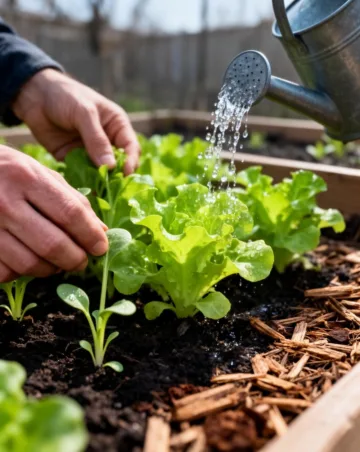
Use a mist setting on your hose or a watering can with a fine rose. You want to moisten the soil without washing away the shallow-buried seeds. Keep the soil consistently moist until sprouts appear, usually within 7 to 10 days.
Step 4: Thinning Your Seedlings
Once your plants are about 2 inches tall, thin them out. For leaf lettuce, space them 4 inches apart. For Romaine or Butterhead, give them 8 to 10 inches of space. You can eat the tiny thinnings in a salad so nothing goes to waste!
Step 5: Mulching and Maintenance
Apply a thin layer of clean straw or dried grass clippings around the base of the plants. This keeps the soil cool, retains moisture, and prevents mud from splashing onto your clean leaves when it rains.
Tips from Experienced Gardeners
After a few seasons of growing greens, you pick up a few tricks that the seed packets don’t always mention. Here are the secrets to a professional-grade harvest:
- Succession Planting: Do not plant all your seeds at once. If you do, you will have twenty heads of lettuce ready on the same day. Instead, plant a small patch every 10 to 14 days. This ensures a steady supply of young, sweet leaves all season long.
- Water in the Morning: Watering early in the day allows the leaves to dry before nightfall, which significantly reduces the risk of fungal diseases and slug damage.
- Harvesting in the Cold: Pick your lettuce in the early morning while the leaves are still turgid (full of water). They will stay crisp much longer in the fridge if harvested before the sun hits them.
Common Mistakes to Avoid
Even though lettuce is easy to grow, a few common pitfalls can ruin a crop. Watch out for these errors:
Waiting Too Long to Harvest
Lettuce does not get better as it gets bigger. Small, young leaves are always sweeter. If you wait until the plant starts to look like a Christmas tree (growing tall and pointy), it has begun to bolt, and the flavor will be unpleasantly bitter.
Overcrowding
If plants are too close together, air can’t circulate. This leads to bottom rot and mildew. Be brave and thin your seedlings according to the recommended spacing.
Neglecting the Soil Moisture
Lettuce has very shallow roots. It cannot reach deep into the ground for water during a dry spell. If the top inch of soil feels dry, it is time to water.
Tools or Materials Needed
You don’t need a shed full of expensive equipment to grow greens. Here is a basic checklist:
- Quality Seeds: Look for “heat-tolerant” varieties if you live in a warmer climate.
- Hand Trowel: For mixing in compost and light digging.
- Watering Can or Wand: A gentle spray is necessary for delicate seedlings.
- Garden Hoe: For keeping the area between rows free of weeds.
- Organic Fertilizer: A liquid seaweed or fish emulsion fertilizer is a great nitrogen source.
Seasonal or Climate Considerations
Lettuce is the champion of the shoulder seasons. While most people think of gardening as a summer activity, lettuce prefers the bookends of the year.
Spring and Autumn Windows
In most regions, you can start seeds outdoors as soon as the soil temperature reaches 40°F (4°C). In the fall, you can start seeds again in late August or September to enjoy harvests right up until the first hard frost. Lettuce can actually survive a light frost; it often makes the leaves taste sweeter!
Summer Heat Strategies
If you want to grow through July, look for “bolt-resistant” varieties. You can also use shade cloth to drop the temperature around the plants by several degrees, mimicking the cooler weather they love.
Benefits of This Gardening Method
Growing your own salad greens offers more than just culinary perks. It is an environmentally friendly way to eat. Think about the “food miles” involved in store-bought lettuce, which is often shipped in refrigerated trucks across the country. Growing it at home reduces your carbon footprint to zero miles.
Additionally, you have complete control over what goes onto your food. By using organic methods and compost, you ensure your greens are free from synthetic pesticides and herbicides. Plus, the nutritional value of lettuce begins to drop the moment it is harvested; by picking it fresh, you are getting the maximum vitamins and minerals possible.
Alternative Methods: Beyond the Backyard Bed
If you don’t have a traditional garden space, don’t worry! Lettuce is incredibly adaptable.
Container Gardening
Lettuce is the perfect candidate for pots. Since it has shallow roots, it doesn’t need deep containers. A simple window box or a 10-inch pot is plenty of room for several plants. This also makes it easier to move the plants into the shade during a heatwave.
Hydroponics
Lettuce is the most common crop grown in indoor hydroponic systems. Since it grows so quickly and doesn’t require heavy fruit production, it thrives in water-based systems. This allows you to have fresh greens in the middle of winter!
Conclusion
Embarking on the journey of growing lettuce is one of the quickest ways to see the “fruits” of your labor. By understanding the specific needs of your chosen variety and timing your spring lettuce planting correctly, you can transform a small patch of earth into a bountiful salad bar. Remember to keep the soil moist, thin your seedlings for better airflow, and harvest early and often for the best flavor. Whether you prefer the crunch of Romaine or the soft leaves of a Butterhead, the world of home-grown greens is vast and delicious. There is no better time than today to grab a packet of seeds and start your own garden plot. Happy planting!
Frequently Asked Questions
1. How long does it take for lettuce to grow from seed to harvest?
Most leaf varieties are ready for their first harvest in about 45 days. Heading varieties, like Romaine, can take between 60 to 75 days to reach full maturity.
2. Why does my lettuce taste bitter?
Bitterness is usually caused by heat or age. When the temperature stays too high, the plant produces a milky sap containing “lactucarium,” which tastes bitter. Try to grow lettuce in cooler weather or provide shade.
3. Can I regrow lettuce from a grocery store stump?
Yes, you can place the bottom 2 inches of a Romaine heart in a shallow dish of water. It will sprout new leaves from the center, though they won’t grow into a full new head, they are great for a quick snack.
4. Do I need to fertilize my lettuce?
If your soil is rich in compost, you may not need any extra fertilizer. However, a nitrogen-rich organic liquid fertilizer applied every 3 weeks can help boost leaf production if your plants look pale.
5. How do I protect my lettuce from slugs?
Slugs love damp, leafy greens. You can use copper tape around pots, beer traps, or organic slug pellets. Keeping the leaves dry by watering only at the base of the plant also helps deter them.