The Ultimate Guide to Crunchy Success: How to Harvest the Best Backyard Cukes
Welcome to the World of Fresh Cucumbers
There is nothing quite like the snap of a fresh cucumber plucked straight from the vine. If you have ever tasted a store-bought cucumber and found it watery or bland, you are in for a treat. Homegrown varieties are bursting with flavor, cooling juices, and an incredible aroma that fills the garden on a warm summer afternoon. For many of us, the desire to grow cucumbers starts with the dream of homemade pickles or crisp summer salads, but it quickly becomes a rewarding hobby that returns its weight in green gold.
Whether you have a sprawling backyard or a small balcony with just enough room for a few pots, these versatile plants are surprisingly easy to manage if you know their basic needs. To help you transition from a curious beginner to a confident harvester, I have put together my favorite cucumber growing tips to ensure your vines are productive and healthy all season long. Let’s dive into everything you need to know to get your garden growing.
Choosing Your Cucumber Variety
Bush vs. Vining Types
Before you get your hands in the dirt, you need to decide which type of plant fits your space. Vining cucumbers are the most common; they grow on vigorous vines (often 6 to 8 feet long) and thrive when climbing up a fence or trellis. Bush varieties, on the other hand, stay in compact mounds about 2 to 3 feet wide, making them the perfect choice for containers or small raised beds.
Slicing vs. Pickling
Are you looking for long, smooth-skinned fruits for your lunchtime sandwich? You’ll want “Slicing” cucumbers like ‘Marketmore 76’ or ‘Straight Eight.’ If your goal is to fill jars with vinegar and dill, look for “Pickling” varieties like ‘Boston Pickling’ or ‘Bush Pickle.’ Pickling types are generally shorter, bumpier, and have a thicker skin that stays crunchy during the canning process.
Site Selection and Soil Preparation
Sunlight Requirements
Cucumbers are sun worshippers. To produce those heavy fruits, they need at least 6 to 8 hours of direct sunlight every day. If they are tucked away in the shade, you will find and few flowers and an increased risk of powdery mildew on the leaves.
The Secret is in the Soil
These plants are “heavy feeders,” meaning they need a lot of nutrients. Aim for loose, well-drained soil rich in organic matter. I always recommend mixing in at least two inches of aged compost or well-rotted manure before planting. The soil pH should be slightly acidic to neutral, ideally between 6.0 and 7.0.
Step-by-Step Instructions for Success
Ready to get started? Follow these simple steps to grow cucumbers that will be the envy of the neighborhood. By following these cucumber growing tips, you can avoid the most common pitfalls of early-season gardening.
Step 1: Timing the Planting
Cucumbers are extremely sensitive to cold. Do not plant them until the soil is at least 65°F (18°C) and all danger of frost has passed. In many zones, this is about two weeks after the last frost date.
Step 2: Sowing the Seeds
You can start seeds indoors 3-4 weeks before the last frost, but cucumbers have sensitive roots and don’t like being moved. Direct sowing is usually best. Poke a hole about 1 inch deep. If you are planting in a row, space seeds 6 inches apart. If you are planting in “hills” (small mounds), plant 3 seeds per hill, with hills spaced 3 feet apart.
Step 3: Thinning the Seedlings
Once your seedlings are about 3 inches tall and have their first “true leaves,” thin them out. If you planted in hills, keep the strongest plant and snip the others with scissors (don’t pull them, or you might hurt the roots of the one you keep).
Step 4: Supporting the Vines
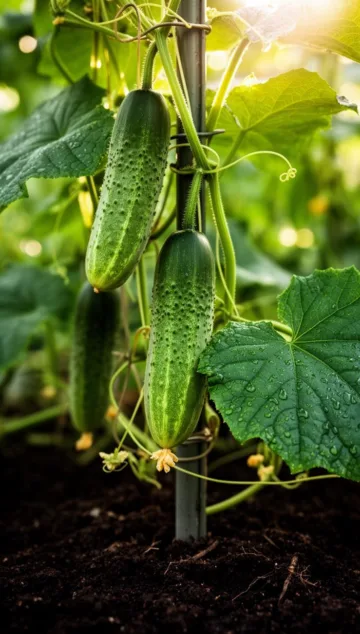
If you are growing vining types, install your trellis or cattle panel immediately after planting. Training them to grow vertically saves space and keeps the fruit off the ground, where pests and rot are more likely to strike.
Step 5: Watering and Mulching
Keep the soil consistently moist but never soggy. Apply a layer of straw or shredded leaves around the base of the plants to hold in moisture and keep the roots cool.
Tips from Experienced Gardeners
Encourage Pollinators
Most cucumbers produce separate male and female flowers on the same plant and rely on bees to move pollen between them. To boost your yield, plant flowers like marigolds, zinnias, or borage nearby to attract a buzz of activity to your garden.
Deep Watering is Key
Avoid light sprinkles every day. Instead, give your plants a deep soak at the base once or twice a week (depending on the heat). This encourages the roots to grow deep into the soil, making the plant more drought-resistant.
Common Mistakes to Avoid
Crowding the Plants
It is tempting to squeeze in “just one more” seedling, but cucumbers need air circulation. Crowded plants trap humidity, which leads to fungal diseases like downy mildew. Follow the spacing recommendations on your seed packet religiously.
Neglecting the Harvest
Cucumbers grow incredibly fast—sometimes an inch or more in a single day! If you leave large, overripe cucumbers on the vine, the plant will think its job is done and stop producing new flowers. Check your vines every morning and harvest frequently.
Tools and Materials Needed
- Quality Seeds: Look for “disease-resistant” labels.
- Garden Trowel: For digging small holes or mixing in compost.
- Compost: To enrich the soil.
- Trellis or Fence: For vining varieties.
- Soaker Hose: The best way to water the base without wetting the foliage.
- Garden Snips: To harvest fruit without tearing the delicate vines.
Seasonal and Climate Considerations
Dealing with Heat Waves
While cucumbers love the sun, extreme heat (above 90°F) can cause the pollen to become sterile or the plant to produce only male flowers. During a heatwave, you might notice a temporary stop in fruit production. Be patient and keep them watered; they will bounce back once the temperature drops.
Short Season Solutions
If you live in a northern climate with a short summer, look for “short-season” or “early” varieties that mature in 50 days rather than 70. Using black plastic mulch can also help warm the soil faster in the spring.
Benefits of Growing Your Own Cucumbers
Beyond the superior taste, growing your own allows you to access varieties you’ll never find in a supermarket. Have you ever tried a Lemon Cucumber? They are yellow, round, and incredibly sweet. Or perhaps a Suyo Long, a ribbed Chinese variety that can grow nearly two feet long? Gardening gives you a palette of textures and flavors that are simply unavailable to the average consumer.
Alternative Methods: Containers and Straw Bales
Container Gardening
If you only have a patio, choose a “Bush” variety and a pot that holds at least 5 gallons of soil. Ensure the pot has excellent drainage and use a high-quality potting mix rather than garden soil, which is too heavy for containers.
Straw Bale Gardening
Cucumbers love the heat generated by a “cooking” straw bale. Planting directly into a conditioned bale of straw is an excellent way to grow cukes if you have poor soil or want to avoid weeding altogether.
Conclusion
Gardening is a journey of trial and error, but few plants provide such a fast and delicious reward as the humble cucumber. From the moment you tuck those seeds into the warm earth to the day you crunch into your first harvest, the process is pure magic. When you grow cucumbers in your own backyard, you aren’t just producing food; you are cultivating health, flavor, and a deeper connection to the seasons. I hope these cucumber growing tips give you the confidence to start your own vine today. Happy gardening!
Frequently Asked Questions
1. Why are my cucumbers bitter?
Bitterness is usually caused by stress. This could be from extreme heat, lack of consistent water, or poor soil quality. Keeping the plants mulched and well-watered is the best way to prevent the “bitter gene” from activating.
2. Do I need to prune my cucumber vines?
While not strictly necessary, pruning the “suckers” (secondary vines) can help the plant focus its energy on a main stem, resulting in larger fruit and better airflow. This is especially helpful if you are growing vertically on a trellis.
3. How do I know when a cucumber is ready to pick?
Size is the best indicator. Slicing cucumbers are usually best at 6-8 inches, while pickling types are harvested at 2-4 inches. If they start to turn yellow at the end, they are overripe and will likely be bitter and seedy.
4. Can I grow cucumbers indoors?
It is difficult because they need high light intensity and pollination. However, if you have a very bright sunroom or high-quality LED grow lights, you can choose “Parthenocarpic” varieties, which do not require bees to produce fruit.
5. Why are the leaves on my plant turning white and powdery?
This is likely Powdery Mildew, a common fungal disease. To prevent it, always water at the base of the plant to keep leaves dry and ensure there is plenty of space between plants for airflow.