Sweet Summer Success: The Ultimate Guide to Harversting Your Own Sun-Kissed Melons
Why You Should Add Watermelons to Your Garden This Year
There is nothing quite like the crisp, cold crunch of a home-grown watermelon on a sweltering July afternoon. While many gardeners feel intimidated by the sprawling vines and long growing seasons, learning how to grow watermelon is actually one of the most rewarding projects you can undertake in your backyard. Unlike those bland, pithy melons often found in supermarkets, home-grown varieties are bursting with high sugar content and a complex sweetness that only comes from ripening on the vine. Whether you have a massive farm plot or a small suburban patch, this watermelon planting guide will walk you through the essentials of sun, soil, and hydration to ensure your harvest is the talk of the neighborhood.
Selecting the Right Cultivars for Your Climate
Early Season Varieties for Shorter Summers
If you live in a northern climate with shorter summers, look for “early” varieties. Types like ‘Sugar Baby’ or ‘Blacktail Mountain’ reach maturity in about 75 to 80 days. These produce smaller, “icebox” sized fruits that are easier to manage and quick to ripen before the first frost hits.
Heirloom Giants for the Patient Gardener
For those in the South with long, hot summers, heirloom giants like ‘Moon and Stars’ or ‘Georgia Rattlesnake’ are spectacular choices. These require upwards of 90 to 100 days of heat but produce massive, prize-winning fruits with incredible flavor profiles.
Seedless vs. Seeded
Beginners should generally start with seeded varieties. Seedless watermelons are a bit more finicky to germinate and require a “pollinator” plant nearby to produce fruit. Start with a classic seeded variety to build your confidence first.
Preparing the Perfect Growing Site
Sunlight Requirements
Watermelons are sun worshippers. They require a minimum of 8 to 10 hours of direct sunlight per day. Without ample sun, the plants will produce plenty of leaves but very little sugar, resulting in tasteless fruit.
Soil Composition and pH
These plants are heavy feeders that prefer well-draining, sandy loam soil. Aim for a soil pH between 6.0 and 6.8. If your soil is heavy clay, consider building raised mounds or “hills” to improve drainage and help the soil warm up faster in the spring.
Step-by-Step Instructions for a Bountiful Harvest
Achieving a successful harvest is all about timing and preparation. To grow watermelon successfully, you must wait until the soil is consistently warm—at least 70°F (21°C). Following a structured watermelon planting guide ensures you don’t skip the critical steps that lead to healthy vine development.
Step 1: Germination
In warmer zones, sow seeds directly into the garden. In cooler zones, start seeds indoors in peat pots 3 to 4 weeks before the last frost. Be careful not to disturb the roots during transplanting, as watermelons are notoriously sensitive to root handling.
Step 2: Planting in Hills
Space your “hills” about 4 to 6 feet apart. Sow 4 to 5 seeds per hill, buried about 1 inch deep. Once the seedlings are 3 inches tall, thin them out so only the two strongest plants remain in each hill.
Step 3: Consistent Hydration
Watermelons are composed of over 90% water. Keep the soil consistently moist but not waterlogged. Use drip irrigation or a soaker hose at the base of the plant to keep the leaves dry, which helps prevent fungal diseases like powdery mildew.
Step 4: Pollination and Fruit Set
The vines produce separate male and female flowers. Bees are your best friends here! Avoid using pesticides during the morning hours when bees are most active. Once you see a tiny green bulb at the base of a flower, you know a female flower has been successfully pollinated.
Tips from Experienced Gardeners
The Board Trick
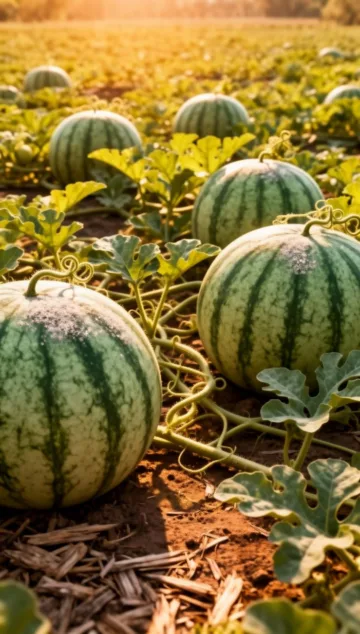
To prevent the bottom of your melons from rotting or being eaten by soil-dwelling pests, gently lift the growing fruit and place it on a piece of cardboard, a flat rock, or a specialized melon cradle. This also helps the fruit ripen more evenly.
Mulching for Moisture
Apply a thick layer of organic mulch, such as straw or shredded leaves, once the vines begin to “run” (spread out). This suppresses weeds, retains moisture, and keeps the fruit off the bare dirt.
Common Mistakes to Avoid
Planting Too Early
Watermelons have zero tolerance for frost. Even a cold night (below 50°F) can stunt the growth of the plant for the entire season. Patience is key; wait for the soil to feel warm to the touch.
Overwatering Near Harvest
While water is vital during growth, you should actually dial back the watering during the last week of ripening. Too much water at the very end can dilute the sugars and even cause the fruit to split open.
Ignoring Pests
Cucumber beetles are the nemesis of most melon growers. They eat the leaves and can spread bacterial wilt. Inspect your vines daily and use neem oil or physical barriers like row covers until the flowers appear.
Tools or Materials Needed
- Quality Seeds: High-germination seeds adapted to your local zone.
- Compost: Well-rotted manure or garden compost to enrich the soil.
- Soil Thermometer: To ensure the ground is warm enough for planting.
- Soaker Hoses: For deep, targeted watering at the roots.
- Liquid Seaweed Fertilizer: For a nutrient boost during the early growing phase.
Seasonal or Climate Considerations
Hot and Humid Climates
In the Southeast, humidity can lead to fungal issues. Ensure you space your plants wide enough to allow for maximum airflow between the leaves.
Arid and Dry Climates
In Western states, evaporation is your biggest enemy. Use heavy mulching and consider afternoon shade cloth if temperatures consistently soar above 100°F, which can cause the pollen to become sterile.
Benefits of Growing Your Own Watermelon
The primary benefit is, of course, flavor. Most commercial watermelons are bred for thick rinds to survive shipping, not for taste. Growing your own allows you to explore “thin-skinned” varieties that are incredibly juicy. Additionally, watermelons are packed with Lycopene, Vitamin C, and Vitamin A, making them a powerhouse for heart health and hydration.
Alternative Growing Methods
Vertical Gardening
If you have a small backyard, you can grow smaller “icebox” varieties on a heavy-duty trellis. You will need to create “fruit hammocks” using old t-shirts or pantyhose to support the weight of the ripening melons so they don’t snap the vine.
Container Gardening
Yes, you can grow watermelons in pots! You will need at least a 10-gallon container per plant and a variety specifically labeled as a “bush” or “dwarf” type, such as ‘Bush Sugar Baby’.
Conclusion: Harvesting Your Reward
Learning how to grow watermelon is a journey that teaches patience and attentiveness. By selecting the right variety for your zone and following a reliable watermelon planting guide, you can transform a sunny patch of dirt into a summer oasis. Remember to check for ripeness by looking for a creamy yellow “field spot” on the bottom and a dried-out brown tendril near the fruit’s stem. Once you cut that first melon from the vine and taste the sun-warmed sweetness, you’ll never want to go back to store-bought again. Happy gardening!
Frequently Asked Questions
1. How can I tell if a watermelon is ripe?
The most reliable way is to look at the curly tendril closest to where the melon attaches to the vine. If it is green, it’s not ready. If it is completely brown and shriveled, the melon is likely ripe. Also, look for a buttery yellow spot on the bottom.
2. Do I need to prune my watermelon vines?
Generally, pruning is not necessary. However, in regions with short summers, some gardeners pinch off the growing tips of the vines in late summer to force the plant to put all its energy into ripening the existing fruits rather than making new ones.
3. Why are my watermelons small and misshapen?
This is usually due to poor pollination. If the bees don’t visit the flower enough times, the fruit won’t develop fully. This can also be caused by inconsistent watering during the first month of fruit growth.
4. Can I grow watermelons from grocery store seeds?
It is not recommended. Most store-bought melons are hybrids, and their seeds either won’t grow or will produce fruit that is nothing like the original melon. It is best to buy stabilized seeds from a reputable nursery.
5. Why are the leaves on my vine turning white?
This is likely powdery mildew, a fungal disease common in humid weather. Improve airflow and try a spray of one part milk to nine parts water to help control the spread on the leaves.