The Ultimate Guide to a Lush Green Yard: Mastering Your Early Season Maintenance
After a long, cold winter, there is nothing quite as satisfying as seeing the first hints of green peeking through the melting snow. However, that transition from a dormant, brown patch of land to a vibrant velvet carpet doesn’t happen by accident. If you want a yard that makes the neighbors stop and stare, you need to start with the right spring lawn care tips. Getting outdoors and focusing on your lawn care april tasks ensures that your grass has the strength to withstand the summer heat and the resilience to ward off pests. In this guide, we will walk through the essential steps to revive your turf and set the stage for a healthy growing season.
Assessing the Post-Winter Damage
Before you grab your mower or head to the garden center, you need to take a walk around your property. Winter can be harsh on turfgrass, leaving behind more than just a few stray branches. You are looking for specific issues that need immediate attention before the peak growing season kicks in.
Identifying Snow Mold
Snow mold is a fungal disease that appears as circular, crusty patches of matted grass. It often looks gray or pink. If you spot this, don’t panic. Usually, a gentle raking to loosen the matted fibers and allow airflow will solve the problem as the weather warms up.
Checking for Soil Compaction
High-traffic areas—like the path the dog runs or where the kids play—often suffer from soil compaction. If the ground feels as hard as concrete, the roots of your grass won’t be able to access oxygen or water. A simple “screwdriver test” (seeing how easily you can push a screwdriver into the soil) can tell you if you need to aerate.
Cleaning and Thatching: The First Real Work
Once the soil is no longer “squishy” or waterlogged, it’s time to start the physical cleanup. Working on a lawn that is too wet can actually damage the soil structure and pull up healthy grass by the roots.
Raking with Purpose
This isn’t just about picking up old leaves. A deep raking helps remove “thatch”—the layer of dead organic matter that sits between the green blades and the soil surface. While a little thatch is good for insulation, more than half an inch can block moisture and nutrients from reaching the roots.
Debris Removal
Gather fallen twigs, pinecones, and any litter that may have blown into your yard over the winter. This prevents these items from being “mulched” by your mower later, which can create uneven patches and dull your mower blades.
Nutrients and Soil Health
A beautiful lawn is built from the underground up. You can’t have healthy blades without healthy soil chemistry.
The Importance of Soil Testing
Instead of guessing what fertilizer to buy, consider a soil test kit. These kits measure the pH level and the levels of Nitrogen, Phosphorus, and Potassium. Most lawn grasses thrive in a slightly acidic to neutral pH (6.0 to 7.0). If your soil is too acidic, you might need an application of lime.
Fertilizing the Right Way
Spring fertilization should be light. You want to encourage root development more than rapid top growth. Look for a slow-release nitrogen fertilizer that will feed the grass steadily over several weeks rather than giving it a “sugar crash” of quick-release chemicals.
Step-By-Step Instructions for Spring Success
Follow this sequence to ensure you are maximizing your efforts during the crucial early weeks of the season. Following these spring lawn care tips will save you hours of work later in the summer. When you prioritize your lawn care april checklist, you are working with nature’s natural growth cycle rather than against it.
1. Wait for the Ground to Dry: Never start heavy maintenance while the ground is soggy. You will compact the soil and kill the crown of the grass.
2. Deep Raking: Use a flexible leaf rake to pull up dead grass and break up any snow mold patches.
3. Aerate if Necessary: If your soil is compacted, use a core aerator to pull small “plugs” out of the ground, allowing the earth to breathe.
4. Overseed Bare Spots: Apply a high-quality grass seed to any thin or bare areas. Be sure to keep these spots consistently moist for at least two weeks.
5. Apply Pre-Emergent Herbicide: If you struggle with crabgrass, apply a pre-emergent barrier once the forsythia bushes finish blooming but before the soil reaches 55 degrees Fahrenheit.
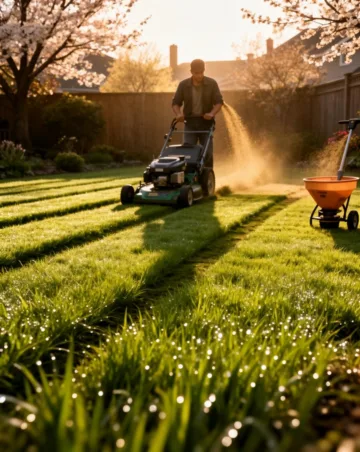
6. Mow High: For your first few mows of the season, set the blade high. This encourages the roots to grow deeper.
Tips from Experienced Gardeners
Veteran “turf pros” often have a few secrets up their sleeves. One of the best tips is to “mow the opposite way.” If you always mow north-to-south, switch to east-to-west. This prevents the grass from leaning in one direction and keeps the soil from developing ruts.
Another pro tip: Sharpen your mower blades every spring. A dull blade tears the grass rather than cutting it, which leaves the plant vulnerable to diseases and turns the tips of the grass brown.
Common Mistakes to Avoid
- Fertilizing Too Early: If you fertilize while the grass is still dormant, the nutrients will just wash away into the groundwater, wasting your money and polluting the environment.
- Scalping the Lawn: Cutting the grass too short in the spring exposes the soil to sunlight, which triggers weed seeds to germinate. Keep it at least 3 inches tall.
- Overwatering: In the spring, Mother Nature usually provides enough rain. Overwatering can lead to shallow root systems and fungal outbreaks.
Tools and Materials Needed
To get the job done right, you should have the following items in your garage:
- Rake: Both a heavy-duty garden rake and a flexible leaf rake.
- Core Aerator: Can be a hand tool or a motorized unit rented from a local hardware store.
- Spreader: A broadcast or drop spreader for even distribution of seeds and fertilizer.
- Soil Test Kit: Available at most extensions offices or garden centers.
- High-Quality Seed: Choose a blend that matches your sun/shade conditions (e.g., Kentucky Bluegrass for sun or Fine Fescue for shade).
- Grass Clipper/Edger: For that professional, clean-cut look along sidewalks.
Seasonal and Climate Considerations
Your geographical location dictates your timeline. Gardeners in the transition zone (where both cool-season and warm-season grasses grow) have the trickiest job. If you have Bermuda or Zoysia (warm-season), wait until the grass is fully green before you think about heavy fertilization. If you have Fescue or Ryegrass (cool-season), your window of opportunity is much earlier, as these grasses do their heaviest growing when temperatures are between 60 and 75 degrees.
Benefits of Consistent Spring Care
Investing time now pays dividends. A thick, healthy lawn acts as a natural air conditioner, cooling the area around your home. It also prevents soil erosion and acts as a massive carbon sink. Beyond the environmental benefits, a well-maintained lawn increases property value and provides a soft, safe place for outdoor recreation.
Alternative Methods: The “Low-Input” Approach
If you aren’t looking for a “putting green” look, you might consider a more ecological approach. This involves “Grasscycling” (leaving clippings on the lawn to return nitrogen to the soil) and allowing for some “beneficial weeds” like clover. Clover actually pulls nitrogen from the air and puts it into the soil, acting as a free, natural fertilizer. This method is much better for local pollinators like bees and butterflies.
Conclusion
In summary, a beautiful yard is the result of patience and timing. By following these spring lawn care tips, you are giving your grass the foundation it needs to thrive all year long. Remember that lawn care april is arguably the most important month in the gardener’s calendar, as the actions you take now will dictate the health of your turf for the next six months. Stay consistent, don’t over-chemicalize, and listen to what your soil is telling you. Happy gardening!
—
Frequently Asked Questions
1. When is the best time to start my spring lawn routine?
The best time is when the ground is fully thawed and the soil is no longer saturated with water. A good rule of thumb is to wait until you see the grass actually start to grow and turn green on its own.
2. Should I put down grass seed and weed killer at the same time?
Generally, no. Most pre-emergent weed killers work by stopping seeds from germinating. This means they will stop your expensive grass seed from growing just as effectively as they stop the crabgrass. If you must do both, look for “starter” fertilizers specifically designed to be used with new seed.
3. How high should I set my mower in the spring?
Aim for about 3 to 3.5 inches. Keeping the grass a bit longer helps shade the soil, which keeps it cool and prevents weeds from getting the sunlight they need to sprout.
4. Do I really need to aerate every single year?
Not necessarily. If your soil is sandy or you don’t have much foot traffic, every 2-3 years is fine. However, if you have heavy clay soil or active kids and pets, annual aeration is highly beneficial.
5. Why is my lawn turning yellow after I fertilized it?
This is often “fertilizer burn.” It happens if you apply too much or if the fertilizer wasn’t watered in properly. Always follow the Bag’s instructions for the correct spreader setting to avoid over-applying nutrients.