The Ultimate Green Thumb Starter Kit: Master Your Soil with Confidence
Starting a garden is one of the most rewarding journeys you can undertake. There is a primitive, joyful satisfaction in watching a tiny seed transform into a vibrant flower or a crisp vegetable. However, walking into a garden center for the first time can be overwhelming. Rows of shining steel, various blade shapes, and high-tech gadgets can leave any newcomer questioning where to start. Choosing the right gardening tools beginners need doesn’t have to be a guessing game. By focusing on a few essential garden tools, you can save money, reduce physical strain, and set your backyard project up for long-term success.
Why Investing in Quality Tools Matters
It is tempting to buy the cheapest plastic trowel on the rack, but in the world of horticulture, you truly get what you pay for. Quality tools acting as an extension of your body. When a tool is ergonomic and sharp, gardening feels like a hobby; when it is blunt and poorly balanced, it feels like a chore.
Durability and Longevity
High-quality tools made of forged steel or sustainably sourced hardwood are heritage items. Instead of replacing a snapped plastic handle every season, a well-forged spade can last decades with proper care.
Physical Health and Ergonomics
Repetitive motions like digging and pruning can strain your wrists and back. Professional-grade tools are designed to distribute weight efficiently, reducing the risk of blisters and muscle aches.
The “Must-Have” List for Every New Gardener
Before you buy a motorized tiller or an expensive greenhouse system, you need the basics. We categorize these into four main groups: digging, cutting, maintenance, and protection.
Hand Tools for Close-Up Work
Most of your time will be spent “in the dirt.” This requires small, nimble tools that allow for precision around delicate roots.
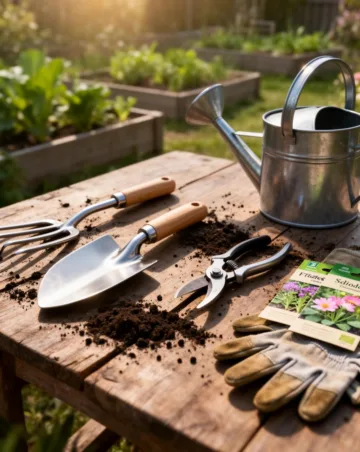
- Hand Trowel: Your primary tool for transplanting bedding plants and herbs. Look for a one-piece design to prevent the head from snapping off.
- Transplanter: Similar to a trowel but narrower, often featuring measurement markings for bulb depth.
- Hand Cultivator: A three-tined “claw” used to break up soil crust and pull out small weeds.
Cutting and Pruning Essentials
Plants need “haircuts” to stay healthy. Whether you are deadheading roses or harvesting kale, you need a clean edge.
- Bypass Pruners: These work like scissors, where two blades pass by each other. They are best for living green wood.
- Anvil Pruners: These have one sharp blade that meets a flat metal surface. These are powerful and better for dead, brittle branches.
- Garden Snips: Lightweight scissors for delicate tasks like harvesting herbs or cutting flowers for a vase.
Long-Handled Tools for Groundwork
To manage the heavy lifting and bed preparation, you need leverage.
- Garden Spade: Unlike a pointed shovel, a spade has a flat, square blade. It is perfect for edges and slicing through sod.
- Bow Rake: Used for leveling soil and clearing away heavy debris.
- Hula Hoe (Action Hoe): A game-changer for weeding large areas; it cuts weeds just below the surface on both the push and pull stroke.
Step-by-Step Instructions: Selecting and Testing Your Kit
Finding the perfect gardening tools beginners should use requires a hands-on approach. You want to ensure that your essential garden tools are a perfect fit for your specific physical height and hand size. Follow these steps when shopping:
Step 1: The “Weight and Balance” Test
Pick up the tool and hold it as you would in the garden. For long-handled tools, ensure the handle reaches your shoulder for the best leverage. For hand tools, the grip should feel comfortable—not too thick for your palm and not so thin that you have to squeeze tightly.
Step 2: Check the Material Grade
Look for “Stainless Steel” or “Carbon Steel.” Carbon steel is incredibly strong and stays sharp longer, but it can rust if not oiled. Stainless steel stays clean and shiny but can be slightly more brittle. Avoid “painted” metal, as the paint often hides low-quality welds.
Step 3: Test the Action
If buying pruners, unlock them and squeeze. The spring should be responsive but not so stiff that it fatigues your hand. There should be no “wiggle” between the blades.
Step 4: Start Small
Don’t buy everything at once. Start with a trowel, a pair of gloves, and a hose. As you realize you need to prune a tree or dig a large hole, buy the specific tool for that job.
Tips from Experienced Gardeners
Experience is the best teacher, but these veteran hacks will save you time:
- The Bucket Sand Trick: Fill a bucket with builder’s sand and a little bit of mineral oil. After every gardening session, plunge your metal tools into the sand. It cleans off the dirt and oils the metal simultaneously to prevent rust.
- Color-Code Your Handles: It is remarkably easy to lose a green-handled trowel in a green garden. Wrap a strip of bright orange or neon pink electrical tape around the handles of your tools so you can spot them from across the yard.
- Sharpen Regularly: A dull tool is dangerous because it requires more force. Buy a simple diamond file and give your hoes and shovels a quick “tune-up” once a month.
Common Mistakes to Avoid
Leaving Tools in the Rain
Moisture is the enemy of wood and metal. Even rust-resistant tools will degrade if left in a damp garden bed overnight. Always bring your kit back to the shed or garage.
Using the Wrong Tool for the Job
Using a hand trowel to dig a hole for a large shrub is a recipe for a broken tool and a sore back. Similarly, using bypass pruners on thick, dead branches can misalign the blades.
Buying Based on Aesthetics
Some tools look beautiful with floral prints or vintage aesthetics. While they look great on social media, they often lack the structural integrity needed for real-world gardening. Prioritize function over fashion.
Tools or Materials Needed for Maintenance
To keep your investment in top shape, you should have a small “maintenance kit” in your shed:
- Linseed Oil: For rubbing into wooden handles to prevent splintering and drying.
- Steel Wool: To scrub off stubborn rust spots.
- Whetstone or File: To maintain the edge on pruners and loppers.
- Large Tub or Bin: To organize your hand tools so they aren’t scattered across the floor.
Seasonal or Climate Considerations
Your tool needs may shift depending on where you live and what time of year it is.
- High Humidity/Coastal Areas: If you live near the ocean, salt and moisture will accelerate rust. Stainless steel is highly recommended for these climates.
- Clay vs. Sandy Soil: If you have heavy clay soil, look for “forged” steel spades which won’t bend under the pressure of heavy earth. For sandy soil, a lighter aluminum tool may suffice.
- Winter Prep: Before the ground freezes, thoroughly clean and oil all tools. Drain your garden hoses and store them inside to prevent the rubber from cracking in the cold.
Benefits of Having the Right Gear
The most significant benefit is consistency. When gardening is physically easy and the tools work as intended, you are much more likely to step outside and tend to your plants. This leads to healthier crops, fewer pests (because you notice them sooner), and a more beautiful landscape. Additionally, sharp tools create clean cuts on plants, which heal faster and are less susceptible to fungal diseases than the “crushed” edges left by dull blades.
Alternative Methods: The Minimalist Approach
You don’t need every gadget. If you are on a strict budget, consider these alternatives:
- The Sharp Stick Method: For years, gardeners used simple digging sticks for planting seeds.
- Kitchen Upcycling: An old serrated bread knife makes an excellent tool for dividing perennials or cutting through root-bound plants in pots.
- Borrowing and Swapping: Many communities now have “Tool Libraries.” Before buying a heavy-duty post-hole digger you’ll use once, see if your local neighborhood association has one to lend.
Conclusion
Embarking on your horticultural adventure is an exciting step toward self-sufficiency and outdoor relaxation. By prioritizing the gardening tools beginners actually need, you ensure that your early experiences are filled with growth rather than frustration. Remember that your essential garden tools are more than just hardware; they are the bridge between your vision and the soil. Take care of them, keep them sharp, and store them dry. With the right kit and a bit of patience, you’ll be amazed at what you can grow.
Frequently Asked Questions (FAQs)
1. Do I really need a wheelbarrow?
If you have a small balcony or tiny patio garden, no. However, for any garden larger than 100 square feet, a wheelbarrow or garden cart is essential for moving mulch, soil, and heavy plants without straining your back.
2. What is the difference between a shovel and a spade?
A shovel has a curved, pointed blade designed for moving loose material (like a pile of mulch). A spade has a flat, square blade designed for digging precise holes and slicing through roots or turf.
3. How do I stop my wooden tool handles from splintering?
Lightly sand the handles with fine-grit sandpaper and apply a coat of boiled linseed oil. This seals the wood and keeps it smooth and flexible.
4. Can I use dawn dish soap to clean my tools?
Yes! Warm water and mild soap are great for removing sap and soil. Just ensure you dry the tools completely immediately after washing to prevent rust from forming.
5. Where should I store my tools?
Choose a dry, ventilated area like a garden shed or garage. Hanging them on a pegboard is ideal because it keeps the blades off the ground and allows air to circulate around them.