The Ultimate Guide to Growing Nutritious Crops: Choosing the Right Foundation for Your Garden
Why Soil Quality is the Secret to Garden Success
If you’ve ever wondered why some gardens overflow with vibrant tomatoes and crisp kale while others struggle to produce a single sprout, the answer almost always lies beneath the surface. For beginner and intermediate gardeners alike, understanding that your plants are only as healthy as the earth they grow in is the first step toward a bountiful harvest. Finding the best soil for vegetables isn’t just about buying the most expensive bag at the nursery; it’s about creating a living ecosystem that provides nutrients, retains moisture, and allows roots to breathe. When you master the art of the perfect garden soil mix, you set your plants up for success from day one, reducing the need for chemical fertilizers and constant intervention.
Understanding Your Soil: The Basics of Texture and Composition
Soil is far more than just “dirt.” It is a complex blend of minerals, organic matter, water, and air. To choose the right medium for your veggies, you first need to understand the three main components of soil texture: sand, silt, and clay.
Sandy Soil: The Fast Drainer
Sandy soil has large particles that don’t hold onto water or nutrients very well. While it warms up quickly in the spring—which is great for early planting—it can leave your vegetables thirsty and hungry during the heat of summer.
Clay Soil: The Nutrient Powerhouse
Clay consists of tiny, tightly packed particles. It holds onto nutrients beautifully but drains very slowly. This can lead to “wet feet” or root rot, especially for root vegetables like carrots and parsnips that need loose earth to expand.
Silt and Loam: The Gardener’s Dream
Silt has medium-sized particles, but the ultimate goal for any vegetable grower is “loam.” Loamy soil is a balanced mixture of sand, silt, and clay, combined with plenty of organic matter. It provides the perfect balance of drainage and water retention.
The Role of pH in Vegetable Growth
Even if your soil texture is perfect, your plants won’t thrive if the pH is off. Most vegetables prefer a slightly acidic to neutral pH, typically between 6.0 and 7.0. If the soil is too alkaline or too acidic, plants cannot “unlock” the nutrients in the ground, even if they are present.
Step-by-Step Instructions: Creating the Perfect Bed
Building your own growing medium allows you to customize the environment for your specific garden style, whether you are using raised beds, containers, or in-ground rows. Follow these steps to prepare the best soil for vegetables in your backyard. To start, you will want to create a high-quality garden soil mix by combining several key ingredients to ensure the right structure.
Step 1: Test Your Existing Earth
Before adding anything, use a home testing kit or send a sample to a local university extension office. This tells you exactly which nutrients are missing and if you need to adjust the pH with lime (to raise pH) or sulfur (to lower it).
Step 2: Clear the Area
Remove weeds, rocks, and debris. If you are starting a new bed, consider the “no-dig” method by laying down cardboard to smother grass, which later decomposes into organic matter.
Step 3: Mix Your Base Ingredients
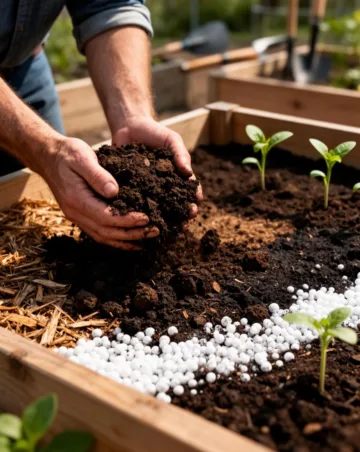
For a standard raised bed, a popular “recipe” is the 1/3 rule: use one-third peat moss or coconut coir (for moisture), one-third vermiculite or perlite (for aeration), and one-third high-quality compost (for nutrients).
Step 4: Incorporate Organic Matter
If planting directly in the ground, spread 2-4 inches of compost over the surface and gently work it into the top 6 inches of soil. This improves the structure of both sandy and clay-heavy ground.
Step 5: Let It Settle
Water the area thoroughly and let it sit for a few days before planting. This allows the microbial life to begin stabilizing the new environment.
Tips from Experienced Gardeners
- Feed the Soil, Not the Plant: Instead of focusing on synthetic liquid fertilizers, focus on adding organic amendments. Healthy soil microbes do the work of feeding the plants for you.
- The Squeeze Test: To check your soil’s moisture and texture, grab a handful and squeeze. It should form a ball that crumbles easily when poked. If it won’t form a ball, it’s too sandy; if it stays in a hard lump, it has too much clay.
- Use Mulch Faithfully: Covering your soil with straw, shredded leaves, or wood chips prevents the sun from baking the life out of the top layer and keeps moisture where it belongs.
Common Mistakes to Avoid
Over-Tilling the Ground
While it’s tempting to use a rototiller to get that perfectly smooth look, excessive tilling destroys the soil structure and kills beneficial earthworms and fungi. Try to disturb the soil as little as possible.
Using Fresh Manure
Never put “hot” or fresh manure directly on your vegetables. It can burn the roots and may contain harmful pathogens. Always ensure manure is well-composted for at least six months.
Neglecting Drainage
Plants need oxygen just as much as water. If you are using containers, ensure they have plenty of drainage holes. If your garden is in a low-lying area, consider building raised beds to prevent drowning your crops during heavy rain.
Tools and Materials Needed
To get your soil in peak condition, you should have the following items on hand:
- Garden Fork: Better than a shovel for breaking up compacted earth without destroying the soil structure.
- Compost: This is the “black gold” of gardening. Use homemade or high-quality store-bought bags.
- Soil pH Test Kit: An essential tool for monitoring the acidity of your beds.
- Wheelbarrow: For mixing your base ingredients and transporting amendments.
- Peat Moss or Coconut Coir: To help with water retention and fluffiness.
Seasonal and Climate Considerations
Your soil needs change with the seasons. In the spring, the goal is to warm the soil up so seeds can germinate. In the summer, the focus shifts to moisture retention. In the fall, it’s all about replenishment.
If you live in a very hot, dry climate, you’ll need to increase the amount of organic matter (like compost) to help the soil hold onto every drop of water. In wet, rainy climates, adding extra perlite or grit can help prevent the soil from becoming waterlogged.
Benefits of Improving Your Soil
Taking the time to build a healthy foundation offers incredible rewards:
- Disease Resistance: Healthy plants grown in nutrient-dense soil are much better at fighting off pests and fungal infections.
- Better Flavor: Vegetables grown in mineral-rich earth often have a more complex and delicious flavor profile.
- Water Efficiency: Great soil acts like a sponge, requiring less frequent watering and saving you money on your water bill.
- Sustainability: By using organic methods, you are contributing to the health of the planet and encouraging biodiversity in your own backyard.
Alternative Methods: Hydroponics and Potting Mixes
If you don’t have access to a backyard, you can still grow amazing vegetables. Potting mixes are different from garden soil; they are usually “soilless” and designed to be very light and airy for containers. Another option is hydroponics, where plants grow directly in nutrient-rich water. While these methods require more monitoring of nutrient levels, they are excellent alternatives for urban gardeners or those with limited space.
Conclusion: Cultivating the Future
Gardening is a journey that begins and ends with the earth. By investing time in creating the best soil for vegetables, you are investing in the health of your family and the beauty of your home. Remember that soil building is an ongoing process, not a one-time chore. Every season that you add compost and protect the ground with mulch, your garden soil mix will become richer and more productive. Start small, observe your plants, and don’t be afraid to get your hands dirty—your future harvests will thank you for it!
Frequently Asked Questions
1. Can I just use topsoil from my yard in containers?
It’s not recommended. Regular yard soil is too heavy for containers and will compact tightly, suffocating the roots and preventing drainage. Always use a dedicated potting or container mix for pots.
2. How often should I add compost to my vegetable garden?
Ideally, you should add a fresh 1-2 inch layer of compost once or twice a year—typically in the spring before planting and again in the fall to prepare the ground for winter.
3. What is the difference between compost and fertilizer?
Think of compost as a “multivitamin” that improves soil structure and provides a slow release of nutrients over time. Fertilizer is more like a “targeted energy drink” that provides a quick boost of specific minerals (Nitrogen, Phosphorus, Potassium).
4. Is peat moss environmentally friendly?
Peat moss is harvested from bogs that take centuries to form, leading to sustainability concerns. Many modern gardeners use coconut coir as a renewable alternative that performs very similarly.
5. Why are my leaves turning yellow despite good soil?
Yellow leaves can be a sign of many things, but in good soil, it’s often a sign of overwatering or a nitrogen deficiency. Check the moisture levels 2 inches below the surface before watering again.